


Building a Resilient Defence Ecosystem
Emerging Paradigm of Warfare from Platforms to Algorithms
For centuries now, technology has shaped the evolution of warfare. The difference today is the pace and scale at which this transformation is unfolding. Until about three decades ago, warfare was largely platform-centric. Military strength was measured by the ability to field and employ aircraft, tanks, artillery, and naval assets at scale, with industrial capacity and logistics being key determinants of combat outcomes.

A major inflection point came during the Gulf War, which marked the shift towards ‘Precision-Centric Warfare’. Precision-guided munitions, satellite navigation, and networked sensors demonstrated that accuracy and information could deliver effects disproportionate to force size, moving away from platform-centricity. In the years that followed, militaries recalibrated doctrines towards integrating sensors, shooters, and command systems to achieve combat advantage.
Today, we are witnessing a more fundamental and disruptive transformation as warfare is increasingly becoming algorithm-driven and multi-domain, where operations across land, air, sea, space, cyber, and the electromagnetic spectrum are synchronised in near-real-time, supplemented by the use of algorithms and artificial intelligence systems across the entire Observe-Orient-Decide-Act (OODA) loop. Decision cycles are compressing, and the ability to process and act on data is emerging as a decisive factor in operational success.
This shift has been clearly visible in ongoing conflicts from Ukraine to the West Asian theatre, and closer to home through lessons from Operation Sindoor. The direction is clear. Advantage is steadily migrating from platforms to technology stacks that connect, enable, and power them.
From Military-Led to Civilian-Driven Innovation
Parallel to this transformation in warfare, the last few decades have witnessed an equally significant shift in the technology landscape. The centre of gravity of innovation has moved from military-led development to civilian-driven ecosystems.
For much of the twentieth century, when regular conflicts and ‘war economies’ were the order of the day, defence establishments defined the technological frontier. Breakthroughs such as the internet, GPS, and advanced communication systems originated within military programmes before finding widespread civilian application. Defence set the pace and direction of innovation, with the civilian industry following.
That equation has now largely reversed. Today, the most disruptive technologies, such as artificial intelligence, cloud computing, semiconductors, robotics, autonomous systems, and data analytics, are driven by the civilian sector. Innovation cycles are faster, technology proliferation is quicker, capital is more accessible, and competition accelerates development in ways traditional defence structures find difficult to match. The transition of major economies from war economies to consumer-driven economies has further accentuated this phenomenon.
For militaries, this creates both opportunity and complexity. Access to advanced technologies has expanded significantly, but dependence on globally distributed ecosystems raises concerns around control, reliability, and long-term resilience. The challenge is not just adoption, but the ability to adapt and integrate these technologies within secure and dependable frameworks.
The Strategic Imperative of Sovereign Technology
In an era of shifting alliances, contested supply chains, and increasing ambiguity in the global order, technology has moved to the centre of strategic autonomy. Access can no longer be taken for granted, and dependencies can quickly translate into strategic constraints.
The issue is not simply about acquiring advanced technologies, but about the degree of control exercised over them across the complete lifecycle of equipment. Through initiatives like Aadhaar and UPI in the civilian domain, India has successfully demonstrated that sovereign and scalable architectures can deliver reliable product quality, resilience, and scale. The lesson for defence lies in recognising the importance of architecture and control.
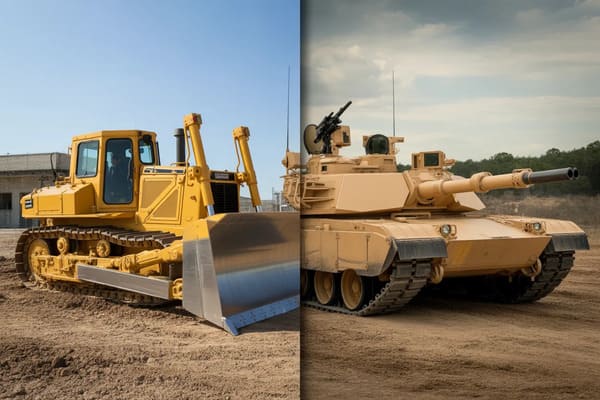
Sovereignty does not imply isolation. It requires clarity on what must be controlled and where collaboration is viable. In modern defence systems, critical layers often lie beneath the surface. Embedded electronics, software, data architectures, and algorithms determine how systems perform and evolve. Without sufficient depth in these areas, even indigenously produced platforms may remain constrained, with a limited ability to exploit them fully over their entire lifecycles. Building capability in these critical layers will be essential to ensure operational resilience and long-term relevance.
Leveraging Dual-Use Technologies: Connecting the Ecosystem
India is at a unique inflection point. Enabling policy frameworks, a maturing entrepreneurial ecosystem, and an evolving financial landscape have together given rise to a new generation of technology-led enterprises. Earlier, access to finance was largely linked to confirmed orders from government or industry. Today, investors are increasingly backing companies with strong technology, intellectual property, and scalability, accelerating the growth of deep-tech enterprises. Today, an increasing number of indigenous, technology-driven firms operate at the cutting edge of technology and at the intersection of civilian and strategic domains.
These firms are investing in research and building the maturity required to bring agility, innovation, and scalability into areas that were traditionally constrained by slower cycles.
In doing so, they also help to overcome the systemic challenges that various pillars of the Indian defence ecosystem—i.e., the Armed Forces, DRDO, DPSUs, private industry (including start-ups), and academia—face because of the very nature of their structure. Many tech firms are structured in a more agile and effective manner, with the ability to innovate faster, integrate more effectively, and scale solutions with greater efficiency.
These companies can support the Armed Forces in ideation, rapid prototyping, and faster capability absorption. They can also help research organisations, including DRDO, in shortening their development cycles and developing products at the cutting edge of technology. They can help the DPSUs and private industry to develop niche solutions faster with greater efficiency, better quality, higher reliability, and scalability. Many of these companies are working closely with academia, helping align research more closely with real-world problems and challenges. Thus, the real value of dual-use technologies lies in how they connect these elements and emerge as a key enabler.
Technologies Shaping the Next Phase of Capability
The shift towards algorithm-centric and multi-domain operations is being enabled by a set of technologies that cut across platforms and stakeholders. Their impact lies in how they strengthen each part of the ecosystem and how effectively they are integrated.
Digital Twins are an exciting technology and are emerging as a link between design and operations. For the Armed Forces, they can help in planning infrastructure and facilities by testing layouts and workflows before execution. They can also enable a more objective evaluation of systems during trials by allowing equipment to be tested across operational limits objectively, thereby strengthening and shortening the procurement procedures. For in-service platforms, Digital Twins can support continuous performance validation and improve platform availability through predictive maintenance and product validation.
Digital twins can also help the DRDO, academia, and industry in reducing development time of new prototypes as well as in multiple associated areas like prototype validation, quality control, and testing. They can also improve lifecycle management activities, including MRO. They can also help overcome the challenges associated with spiral development of products and solutions, an aspect that the Indian defence ecosystem has been struggling with for a very long time now.
Advanced Simulation Systems are yet another technology area with tremendous dual-use capabilities. Traditionally associated with only training, these systems actually go way beyond training and can help in doctrine validation, evolution of operational plans, as well as process and product development. Even within the domain of training, which has largely been limited to individual training in isolation, the potential of simulation can be transformative.
Through Live, Virtual, and Constructive integration, these systems are changing how training is envisioned, planned, and executed. They can enable integrated training at the crew, unit, formation, and theatre levels across services. Training environments that have traditionally been siloed can now function as a unified continuum. Also, wargaming can be made way more immersive, realistic, and reflective of operational conditions. For DRDO and academia, simulation systems can support experimentation, process improvements, as well as product development.
Electronics and Embedded Systems form the foundation of modern capability. The ability to curate customized electronics designs using indigenous chips and circuits, sensors, and firmware, with customised communication protocols and the ability to integrate with third-party products, is a phenomenal enabler.
This can help us reduce external dependence and create a resilient architecture for the development of indigenous solutions.
For the Armed Forces, control over sensors, communication systems, and electronic warfare capabilities is critical to operational effectiveness. In contested environments, this layer often determines whether systems function as intended. Operating at the heart of critical systems, these technologies energize the products effectively. They also support DRDO, academia, and industry in reducing dependency and strengthening the ability to create specialised subsystems and systems, thereby improving resilience, as well as capabilities, across the product lifecycle.
Artificial Intelligence and Machine Learning support decision-making across all levels. Shaping transformation across industries and warfare, these systems enable faster data collection, quicker analysis, improved situational awareness, and support for functions such as surveillance, command and control, and logistics. Their role continues to evolve from augmenting human decision-making towards greater levels of autonomy.
Needless to say, homegrown AI and ML platforms can transform our architectures and make them way more capable. For DRDO and academia, AI and ML open avenues for research in data-driven models and predictive systems. For industry, they enable scalable and software-driven solutions across civilian and defence domains, strengthening the dual-use ecosystem.
Autonomous Systems and Robotics are translating intelligence into action. They enable operations in high-risk environments and improve reach and persistence across land, sea, air, and emerging domains. Their application is expanding beyond support roles into core operational functions. Traditionally used for replacing tasks that were considered to be dull, dirty, and dangerous, autonomous and unmanned systems are finding greater resonance across combat and combat support.
For DRDO, academia, and industry applications, they create unprecedented opportunities in autonomy, control systems, and human-machine integration. They also enable the development of next-generation systems that combine efficiency, safety, and operational effectiveness.
Data Platforms are emerging as the central integrative layer across modern defence systems. For the Armed Forces, they enable the creation of a unified operational and logistics picture by bringing together inputs from multiple sensors, platforms, and domains. This significantly enhances situational awareness, shortens decision cycles, and enables coordinated action across formations and services.
For DRDO and academia, data platforms enable data-driven development, modelling, and validation of systems, allowing for a more objective assessment and faster iteration. For industry, they support system integration, analytics, and the development of scalable digital architectures that can operate across both civilian and defence environments. Their effectiveness, however, depends on interoperability, standardisation, and robust security frameworks, making them critical to enabling true network-centric and multi-domain operations.
Space and Geospatial Technologies extend capability across all pillars of the defence ecosystem. For the Armed Forces, they enhance communication, navigation, surveillance, and command and control, while significantly improving operational and logistical planning. Their role is increasingly central in both strategic and tactical operations.
For DRDO and academia, these technologies enable advanced modelling, geospatial analytics, and the integration of satellite-based data into defence systems. For industry, they open up opportunities in downstream applications, geospatial services, and the integration of space-based capabilities with terrestrial systems. Their real value lies in seamless integration with ground-level systems, enabling more informed and precise decision-making.
Taken together, these technologies matter less as standalone capabilities and more in how they are applied collectively. Their strength lies in improving how the ecosystem functions as a whole, enabling faster development, more effective deployment, and continuous adaptation to evolving operational requirements.
Conclusion
The basis of military advantage is shifting. It is no longer defined by platforms alone, but by the ability to integrate, adapt, and scale technology in response to changing operational demands.
Sovereign dual-use technologies are central to this shift. They combine the speed of civilian innovation with the control required for strategic systems, enabling faster capability development, reducing critical dependencies, and strengthening control over critical technological layers. More importantly, they help align the Armed Forces, DRDO, industry, and academia into a more responsive and effective ecosystem. Resilience, in this context, is built through coherence and control. Nations that can anchor their defence capability in sovereign, dual-use technologies will be better placed to adapt, sustain, and evolve in the face of changing operational demands.