

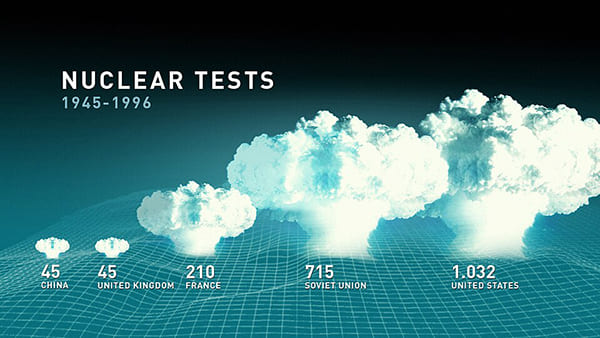

India’s geopolitical landscape is increasingly challenged by the possibility of a simultaneous two-front conflict, underscoring the necessity for advanced strategic deterrents. With adversaries upgrading their nuclear capabilities and expanding conventional forces along critical frontiers, India requires flexible response options capable of decisively influencing enemy calculations. Developing next-generation variable-yield thermonuclear warheads can significantly strengthen India’s deterrence posture.
A variable-yield warhead (often called “dial-a-yield”) is engineered to allow selection of different explosive yields from the same device, granting military planners flexibility in deployment. Achieving this adjustability is a complex engineering challenge: it requires precise control over the physical processes in each stage of the warhead. The following discussion provides a technical overview of the warhead’s architecture and the mechanisms enabling yield modulation, including tritium boosting, spark plug and tamper design, material choices, and the use of advanced computational modeling. Insights from recent high-energy density experiments are also integrated to illustrate how modern research validates the underlying design principles.

Warhead Architecture: Primary and Secondary Stages
Primary Stage (Fission Trigger): The primary is a small implosion-type fission bomb that serves as the trigger for the secondary. Typically composed of a core of fissile material (plutonium-239 with possibly uranium-235), the core is surrounded by chemical high explosives and a neutron-reflecting tamper or casing. Modern primaries are almost universally boosted fission devices: a mixture of deuterium-tritium (D-T) gas is injected into the hollow core of the fissile pit just before detonation. When the high explosives compress the core, the fission chain reaction heat and pressure cause the D-T gas to undergo fusion, releasing a burst of high-energy neutrons. These fusion neutrons dramatically accelerate the fission chain reaction, allowing a much larger fraction of the fissile material to fission before the core disassembles. In effect, boosting can nearly double the fission yield by fissioning more fuel, since the 14 MeV fusion neutrons are far more likely to induce fission than the neutrons from unboosted fission alone. Boosting not only increases yield but also permits smaller primary designs that are “efficient” (more of the fissile core is burned) and immune to pre-detonation. In fact, the technique is so effective that essentially every modern nuclear weapon uses a boosted primary design. The primary’s yield can range from a few kilotons upward, and in a variable-yield system this output is made adjustable (as discussed in a later section) by controlling factors like tritium injection and neutron initiation timing.
Secondary Stage (Thermonuclear Assembly): The secondary is a physically separate component that contains the fusion fuel and other elements necessary for a thermonuclear reaction. In a classic Teller-Ulam layout, the secondary comprises a cylinder of fusion fuel (often lithium-6 deuteride salt, a dry solid) packed around a central spark plug of fissile material (usually a rod of plutonium-239 or uranium-235). This assembly is enclosed by a heavy tamper/pusher, commonly made of depleted uranium or tungsten, which serves dual roles: confining the fuel during compression and, if made of fissionable material like U-238, contributing additional yield via fast fission. The secondary is housed at the opposite end of the warhead casing from the primary, separated by an empty radiation channel (often filled with low-density plastic foam) and sometimes a dense shield or interstage to prevent premature energy transfer. When the primary detonates, a flood of soft X-rays is released and reflected within the sealed weapon casing (the “radiation case”). These X-rays rapidly fill the radiation channel and symmetrically ablate the outer surface of the secondary’s tamper. The ablation acts like a rocket exhaust, driving the tamper and the fuel capsule inward. This radiation-driven implosion crushes the secondary to very high densities. As the secondary is compressed, the central spark plug is also compressed and heated; it soon reaches criticality and undergoes its own fission burst. The spark plug’s fission energy further heats the surrounding fusion fuel, helping to ignite thermonuclear burning in the dense lithium deuteride material. In the ensuing microseconds, fusion reactions spread through the secondary, producing a flood of 14 MeV neutrons and releasing enormous energy. The lithium-6 deuteride is designed such that when bombarded by these neutrons, it breeds tritium in situ (via Li-6 + n → T + He reactions), providing fresh tritium to sustain fusion burn – a process sometimes termed the “jetter” cycle. The combination of X-ray implosion, spark plug fission, and on-the-fly fuel breeding enables the secondary to contribute yields in the hundreds of kilotons to megaton range. Notably, the heavy tamper around the fusion fuel greatly increases overall yield: the secondary’s fusion neutron output induces fast fission in a U-238 tamper and casing, which can account for the majority of the weapon’s total yield. (In typical U.S. thermonuclear weapons, over 80% of the yield comes from fission of the U-238 parts.) This tamper fission greatly amplifies yield but also increases residual radioactive fallout. In some designs, alternate tamper materials (like lead or tungsten) have been tested to produce “cleaner” explosions with a higher fraction of fusion energy at the cost of lower total yield.
Mechanisms for Variable Yield Control
Engineering a variable-yield warhead means the device can be reliably configured to produce different yield outputs on command, typically through pre-detonation settings. Several design mechanisms enable this adjustability:
• Tritium Boost Gas Regulation: The primary stage’s yield can be tuned by adjusting the amount of tritium-deuterium gas injected into the pit. A full D-T fill maximizes boosting (and thus fission yield), whereas a partial fill or no fill yields a much lower primary output. By calibrating the boost gas pressure or quantity to discrete levels (for example, 0%, 50%, or 100% of the standard charge), engineers can define preset yield levels for the primary. In practice, a tritium reservoir system and metering valve are used to introduce the desired amount of gas just milliseconds before detonation. At full boost the primary might yield on the order of a couple hundred kilotons, whereas with minimal or no boost it might only yield tens of kilotons – a dramatic difference arising from the presence or absence of those extra fusion neutrons that drive the fission reaction to completion. Tritium, with its 12.3-year half-life, must be replenished periodically in the warhead’s reservoir as part of routine maintenance, but this is an accepted trade-off for yield flexibility. By precisely controlling boost gas fill, modern warheads effectively have a built-in “dial” for the primary yield.
• Neutron Initiator Timing: Beyond boosting, another lever on the primary’s yield is the timing of the External Neutron Initiator (ENI). All modern implosion primaries include a neutron source that injects a burst of neutrons at the moment of maximum compression to ensure a prompt chain reaction. By deliberately adjusting when this neutron pulse is introduced, the efficiency of the fission burn can be modulated. If the initiator fires slightly early (just before optimal compression), some fission will start when the core density is lower than ideal, thus delivering a reduced yield because the core will blow itself apart before burning completely. In contrast, firing at the optimal peak compression yields the maximum fission output. Therefore, by designing the detonator firing circuit to introduce a small, controlled delay or lead in the neutron injection, one can throttle the yield downward in a repeatable way. For instance, an “early” initiator pulse might intentionally produce a partial fizzle (lower yield), whereas the normal pulse timing produces full yield. This method provides a fine, electronic control of yield just before detonation. It requires a precision timing system for the pulsed neutron source (such as a pulsed plasma discharge or a miniature accelerator-driven D-T source) but allows adjustments in yield without any mechanical changes to the device.

• Secondary Stage Engagement (Selective Ignition): The largest jump in yield comes from whether the secondary stage is ignited or not. A variable-yield warhead can be designed to essentially turn off the secondary in low-yield mode, so that only the primary detonates. There are a few engineering approaches to achieve this. One straightforward method is to exploit the primary’s yield threshold: if the primary’s yield is kept below a certain level (by using the above techniques), the X-ray energy may be insufficient to compress and ignite the secondary. In that scenario, the secondary fails to detonate and the total yield is just the primary’s output – drastically lower than the full design yield. However, solely relying on a reduced primary may be unreliable if, say, a higher setting accidentally triggers the secondary. Thus, more direct secondary inhibition mechanisms have been theorized. For example, a system of movable high-Z shutters or curtains within the radiation case can be used to partially block or absorb the primary’s X-rays in low-yield mode. In a high-yield setting these shutters retract, allowing full radiation coupling, but in a low-yield setting they insert into the line-of-sight between the primary and secondary, protecting the secondary from compression. Such an arrangement would likely use tungsten or uranium sliding panels, and would need ultrafast actuators (as the time between primary and secondary detonation is on the order of microseconds). In practice, implementing moving parts in a warhead is challenging, so designers might opt for passive methods – for instance, a variable-density filler in the radiation channel that either absorbs more radiation in one configuration or becomes transparent in another. Another approach is the use of a small auxiliary explosive to pre-disrupt the secondary in low-yield mode (for example, jostling the fusion fuel so it won’t compress properly), though this is largely speculative. Regardless of method, the goal is to have confidence that in “primary-only” mode the secondary remains truly inert. If successful, this gives a warhead two very distinct yield tiers: a lower-tier (e.g. tens of kilotons or less) from the primary alone, and an upper-tier (hundreds of kilotons to megaton) when the secondary is engaged. Designing the secondary to reliably fail safe when needed – without compromising its performance when enabled – is a significant engineering challenge in variable-yield systems.
• Tamper and Spark Plug Configuration: Certain design choices in the secondary can also modulate yield outcomes, though these are set during design rather than adjusted in real time. The tamper material, as noted, has a profound effect on total yield. Using a uranium-238 tamper maximizes yield by contributing additional fission (fast neutrons from the fusion stage will fission the tamper and casing, adding to yield). In contrast, a non-fissile tamper (such as one made primarily of lead or tungsten) would yield a much lower total explosive energy for the same primary and secondary, since the fusion stage’s neutrons do not generate extra fission explosions in the tamper. This was demonstrated in certain test devices historically dubbed “clean bombs” which sacrificed yield for reduced fallout. While tamper material isn’t a field-adjustable setting, warhead designers consider it as a way to tailor a weapon’s nominal yield and fallout characteristics to mission requirements. The spark plug is another design element influencing yield: a larger or more enriched spark plug will produce a stronger initial fission spike inside the secondary, ensuring the fusion fuel ignites more completely (thus raising yield). If the spark plug is omitted or made of very low mass, the secondary might not ignite at all without it, or would burn less efficiently. Essentially, the spark plug provides an on-demand energy injection to kick-start fusion in the secondary. All modern high-yield secondaries include a spark plug to guarantee ignition; however, if one wanted a design that could alternate between a high fusion yield and a mostly fission-only yield, one could hypothetically include a mechanism to disable the spark plug in low-yield mode (for example, by not allowing it to compress fully or by blocking the neutrons that would initiate it). In practice, such fine control is extremely difficult, so the spark plug’s role is more about ensuring the secondary ignites robustly in normal operation. Nonetheless, its presence and design set the fundamental upper limit of the secondary’s output. Together, choices in tamper and spark plug configuration establish the device’s maximum yield potential and the division between fission and fusion contributions, which are key factors in any variable-yield design strategy.
Materials and Design Considerations
The performance of each stage and the range of yields attainable are tightly linked to material selection and engineering of the components:
• Fissile Core: Most variable-yield warheads use plutonium in the primary core (often alloyed with gallium for phase stability). Plutonium’s high density and fast fission kinetics allow for a compact pit that can achieve high compression and reactivity, which is advantageous for achieving reliable ignition especially in lower-yield (less boosted) configurations. Highly enriched uranium can be used as well or in composite pits, but plutonium’s properties make it preferable for smaller, efficient primaries. The core is surrounded by a reflector/tamper (beryllium or natural uranium) that serves to reflect neutrons back into the core and tamp the explosion’s expansion momentarily. This not only increases yield efficiency but also aids in maintaining chain reaction conditions when yield is being throttled (e.g., in a low-boost setting, a good reflector ensures even the reduced neutron population is utilized). In variable-yield applications, the core and reflector materials must perform consistently across the range of compression and boost scenarios – a significant consideration in design validation.
• Fusion Fuel: The secondary’s fusion fuel is typically lithium-6 deuteride, chosen for its stability and high energy density. Li-6 deuteride is a solid at room temperature, making it convenient to machine into a desired shape (often a cylinder or sphere) and it can be enriched in lithium-6 to optimize tritium production. When the secondary is imploded and heated, neutrons from either the primary or the spark plug convert Li-6 into tritium, which then readily fuses with deuterium. This material choice obviates the need to physically preload large quantities of tritium in the secondary (which would slowly decay and also pose handling issues). Instead, the fusion fuel breeds its own tritium in the instant of detonation. The downside is that lithium deuteride requires extremely high compression and temperature to burn efficiently – hence the need for the robust implosion and spark plug. In warhead design, the exact composition (ratio of Li-6 to Li-7, and presence of any deuterium-tritium gas boost in the secondary) can be tuned to alter performance. For example, adding a bit of D-T gas in void spaces of the secondary can help “pre-seed” the fusion reaction for more yield, but at the cost of complexity and more rapid yield decay due to tritium half-life. Generally, Li-6 deuteride has been the standard for decades due to its reliability and predictable behavior under extreme conditions.
• Tamper and Case Materials: As discussed, using a depleted uranium tamper around the secondary maximizes explosive yield by leveraging fast fission. The weapon’s outer case is also often made of stainless steel or an alloyed uranium (for weight and strength) and serves as the radiation case that traps the X-rays for the microseconds needed to drive the secondary’s implosion. In variable-yield warheads, if designers included physical devices like shutters, these would likely be made of a high atomic number metal (tungsten or uranium) to effectively absorb or block X-rays when engaged. All materials in the secondary must withstand the primary’s initial shock and preheat without degrading so much that they fail to function in high-yield mode. Selecting materials thus involves balancing density (for inertia and tampering effect), opacity to radiation, and melting/vaporization thresholds. In some design studies, advanced materials like aerogels or specialized foams have been considered for the radiation channel filler to tailor how energy is delivered to the secondary. These materials can be engineered to either transmit or absorb radiation more in one mode or another, hence contributing to yield control. Material choices are validated through sub-scale experiments and extensive simulations to ensure they perform as expected in both minimum and maximum yield configurations.
• Precision Engineering: A variable-yield device introduces additional hardware that must function flawlessly under nuclear detonation conditions. For instance, metering the tritium boost gas requires miniaturized high-speed valves that operate in the last moments before the explosive fires. Timing circuits for neutron initiators must be hardened and extremely precise (nanosecond-scale) to achieve the desired yield dial-down without risking a dud or runaway yield. If mechanical interlocks (like shutters or sub-stage barriers) are employed, they need to survive the acceleration and extreme environment until the moment they operate. All components – conventional explosives, detonators, wiring, safety mechanisms – must be engineered with tighter tolerances because the margin for error is smaller when attempting to modulate yield. The warhead must also be robust across the full yield range: it should not accidentally produce more than the intended yield in the “low” setting nor fail to achieve full yield in the “high” setting. Achieving this reliability is a foremost engineering concern, influencing everything from the explosive lens design (shaping the implosion for different yields) to the placement of sensors or monitors that ensure the device is performing as configured.
Computational Modeling and Validation
Because full-scale nuclear testing is limited, designers rely on sophisticated computational simulations to validate that a variable-yield warhead will perform as intended across its settings. Modern nuclear weapon design codes are massive hydrodynamics and radiation transport simulations that model the device’s behavior from the millisecond of high-explosive detonation through the nanoseconds of nuclear reactions. These codes incorporate detailed physics: shock compression of materials, fission chain reactions (with neutron transport), fusion burn kinetics, radiation flow, and even secondary effects like fuel-tamper mixing. To handle variable yields, simulations are run for multiple scenarios – e.g. a full-yield case and a low-yield case – to ensure both meet design predictions. Typically, designers start with lower-dimensional models: a one-dimensional spherical simulation can approximate the primary’s implosion and help calibrate how much boost gas yields what output, by comparison to past test data or known device benchmarks. Likewise, a simplified 1D or 2D model of the secondary (with an assumed X-ray drive) is used to check whether it will ignite or not under certain input energies. These sub-component models allow rapid iteration and “tuning” of design parameters (such as adjusting the thickness of a tamper or the timing of an initiator) before committing to a full-up simulation.
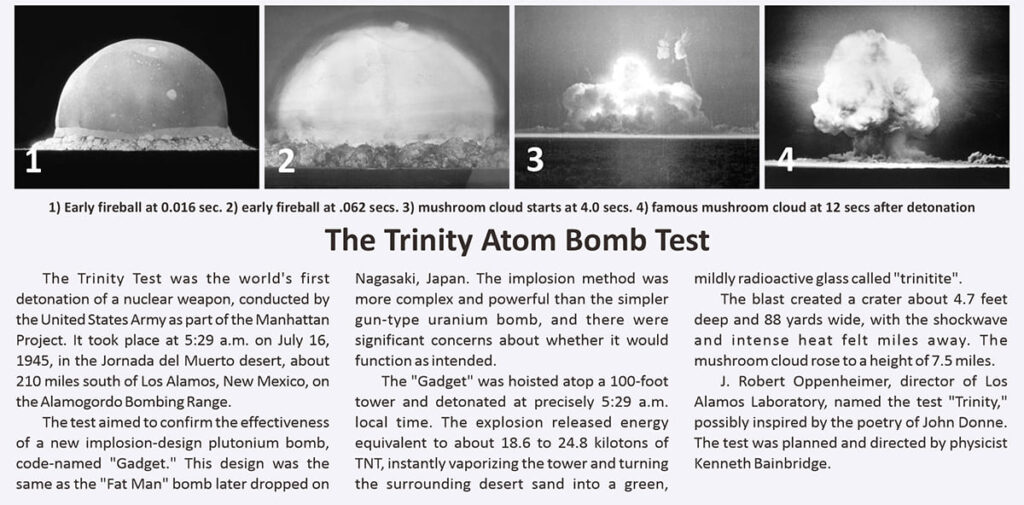
The final verification involves full 2D or 3D simulations of the entire warhead. Two-dimensional (axially symmetric) simulations are a workhorse for warhead design, as they can capture the primary-to-secondary energy coupling along the weapon’s axis and some asymmetry effects, while still being computationally feasible. Three-dimensional simulations offer the most fidelity, allowing analysts to probe off-axis phenomena or manufacturing imperfections (e.g. how a slight asymmetry in the high explosives or a gap in insulation might affect yield). However, 3D runs are exceedingly demanding in compute time, especially for a multi-megaton-yield device. Thus, a handful of high-resolution 3D simulations might be used to validate that no unexpected behavior (like an inadvertent partial secondary ignition in “off” mode) occurs, whereas many 2D runs map out the performance envelope. Computational validation focuses not just on nominal performance but also on edge cases: for example, ensuring that an accidental one-point initiation of the primary’s high explosive will not produce a significant nuclear yield (a safety requirement), or that the weapon will not detonate if dropped or exposed to a fire. For a variable-yield warhead, simulations also explore the transition points – i.e., the exact primary yield at which the secondary lights up. This is critical for confidence that the secondary can indeed be reliably suppressed. The outcome of these extensive simulations is a predicted yield range (for instance, a low setting of ~0.5 kilotons and a high setting of ~50 kilotons for a tactical warhead, or 10 kt vs 100 kt, etc., depending on design) with associated uncertainties. Engineers use uncertainty quantification techniques to put error bars on these yields, by varying input parameters within their plausible ranges and observing the effect on output. If the uncertainty overlaps between the “low” and “high” yields (an indication the settings are not distinct enough), the design must be revised for a clearer separation. Often, historical nuclear test data and experiments are used to calibrate these codes – for instance, data from past boost efficiency trials or from the single-stage detonation of secondary materials. Through this modeling-and-simulation-driven process, the warhead design is refined until it consistently meets its yield specifications. Only then would it be considered for engineering development, and even then, sub-critical experiments or laboratory tests might be done on certain components (like imploding surrogate materials with high explosives) to gather real data to confirm the simulations.
Insights from recent experiments
In recent years, high-energy-density physics experiments have provided critical insights reinforcing confidence in the fundamental physics underlying thermonuclear warhead designs. Recently, the National Ignition Facility (NIF) in the United States achieved a significant milestone by generating more fusion energy than the energy input from lasers, demonstrating a clear transition to self-sustaining fusion reactions. In this experiment, fusion-produced alpha particles (helium nuclei) deposited their energy locally, causing substantial reheating of the surrounding hohlraum cavity-significantly increasing its radiation temperature within fractions of a nanosecond. This observed phenomenon, wherein fusion-generated energy feedback stimulates further fusion, experimentally confirms the long-theorized concept of alpha particle self-heating. Such alpha-driven self-heating underpins the fundamental physics of the secondary stage in thermonuclear warheads, enabling a rapid escalation from initial ignition to full-scale fusion burn. These experiments align closely with theoretical yield-scaling models that describe the highly non-linear growth of fusion output once alpha heating becomes significant, validating computational approaches crucial for predicting warhead performance. Although the laboratory conditions are not identical to operational environments, these high-yield experiments nonetheless provide essential validation data, enhancing confidence in computational models used to design and predict the behavior of variable-yield warheads. Ultimately, such insights support precise control over warhead yields, allowing reliable adjustments between ignition states-a core requirement for advanced strategic weapon systems.
Conclusion
The development of a variable-yield thermonuclear warhead is a tour-de-force of modern engineering and physics. By carefully architecting the primary and secondary stages and incorporating mechanisms for yield control – from tritium boosting systems and precision neutron timing to potential secondary isolation techniques – designers can create a single weapon system that fulfills multiple roles. Each adjustable element, however, introduces complexity that must be mastered through rigorous design, material science, and simulation. The warhead’s architecture (primary trigger, fusion secondary with spark plug and tamper) provides the foundational framework, and on top of this, engineers overlay control features that modulate the energy release. Cutting-edge computational modeling, honed by decades of test data and enhanced by new experimental results, underpins the validation of these designs without full-scale detonations. The result is a weapon whose yield can be tailored to tactical or strategic objectives while ensuring safety and reliability. In essence, the variable-yield warhead represents the convergence of classic nuclear design principles with innovative engineering solutions – all aimed at managing the incredible energies of a thermonuclear explosion with precision and confidence.
Kartikeya Sethi is the Founder of Vel Atomics