

Autonomy, Teaming, and Partnership
Autonomy as the Next Evolution of Air Power
Air power has always evolved alongside the dominant technologies of its era.
The early twentieth century belonged to mechanics: the mastery of engines, wings, and altitude. The Cold War was defined by electronics: radar, stealth, and precision-guided munitions. The twenty-first century belongs to autonomy: perception, reasoning, and coordinated action.

Our (India’s) strategic environment is shifting under the combined pressures of regional tension, rapid technological diffusion, and the imperative of sovereignty in critical capabilities. Flanked by nuclear‑armed neighbours and operating across contested air and maritime domains, we must present credible deterrence while preserving freedom of action on multiple fronts. Reliance on imported technologies and legacy platforms is ceding to a new requirement: build indigenous, intelligent, and resilient systems that adapt faster than the threats they face. Against this backdrop, autonomy is not a luxury; it is a strategic necessity that will shape our ability to defend our skies, protect our seas, and project power across the Indo‑Pacific.
Understanding Autonomy
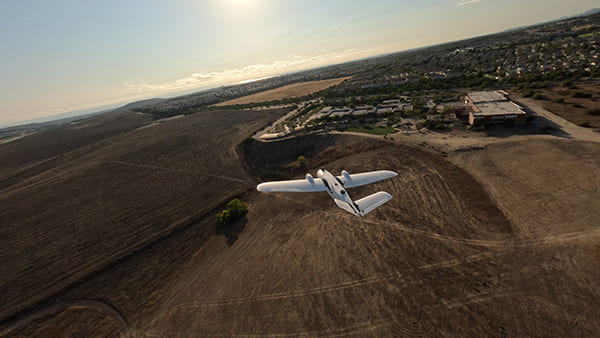
At its core, autonomy is the ability of a system to perceive its environment, interpret complex data, decide on a course of action, and execute. Differentiating automation from mission autonomy – whereas automation follows rules, mission autonomy understands context and adapts to uncertainties. In military air power, this means aircraft, drones, and sensors that respond dynamically to threats, collaborate fluidly, and adjust missions in real time without step‑by‑step direction. Such systems can replan routes under electronic attack, prioritize sensor feeds, or coordinate surveillance coverage across regions. Even when GPS and communications are denied, autonomy continues its mission, relying on uploaded data and making informed decisions. Without it, a mission is merely a plan. In contested environments where links break, manual control falters, and operators are overwhelmed, autonomy turns fragility into endurance.
For us in India, autonomy represents both a necessity and an opportunity. The nation’s airspace, stretching from high-altitude Himalayan borders to vast oceanic approaches, demands persistent surveillance, rapid response, and minimal attrition. Distributed intelligence – systems that think and act collaboratively at the edge – offers a path to surveillance without overstretch.
Simultaneously, autonomy eases manpower and logistics constraints. Intelligent mission management reduces cognitive load on pilots, while extending operational reach and endurance. Where pilots are scarce, autonomy can supplement and step in to fly. By integrating onto systems not bound to long runways, autonomy expands basing options and complicates an adversary’s targeting calculus. Most importantly, it restores freedom of action: the ability to adapt faster than potential adversaries in the shifting tempo of modern conflict.
Teaming as Force Multiplication
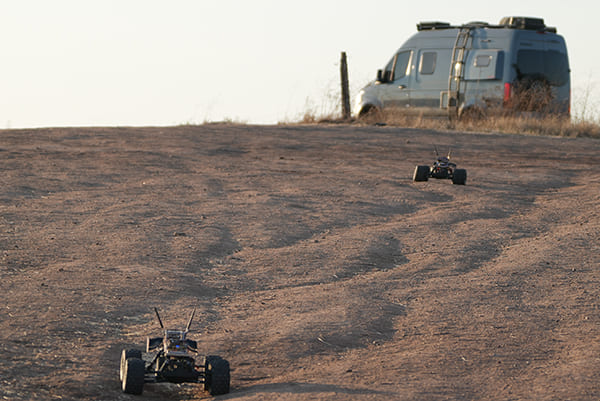
The potential of autonomy multiplies when thought of not as isolated machines, but as teams – networks of autonomous systems that can learn from, coordinate with, and support one another in complex missions.
Teaming allows multiple autonomous assets, whether airborne, maritime, or ground-based, to distribute tasks dynamically. Each autonomous asset becomes part of an extended neural network: observing, orienting, deciding, and acting in concert with its peers. One sensor platform may detect and classify targets; another may relay data through a resilient mesh network; a third may execute a strike or provide support in the event of interference/jamming. The network continually re-weaves itself; if one node is jammed or destroyed, others reroute around the gap or cover/bridge the gap by reassigning responsibilities among the able team members.
This model transforms air power from platform-centric to ecosystem-centric. Rather than concentrating risk in a few expensive manned aircraft, forces can employ many, relatively inexpensive, intelligent systems working together, offering agility, redundancy, and resilience. This is autonomy not as an isolated function, but as a living, adaptive web. Each operates semi-independently, but all share a common intent shaped by human command.
For India, such teaming has profound implications. Along the northern and north-western borders, autonomous airborne systems could coordinate patrol patterns, identify intrusions, and hand off tracking without saturating command networks. Over the Indian Ocean, autonomous reconnaissance aircraft can team with other maritime surveillance assets and even satellites to create and sustain a continuous intelligence picture or maritime domain awareness, thereby creating an ability to instantly react to suspicious movement or emerging crises.
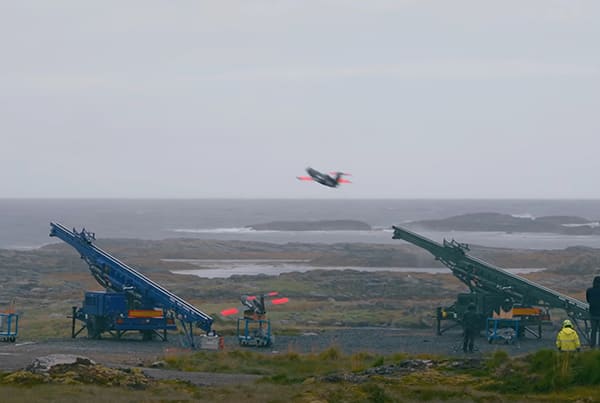
Team’s adaptive behaviour contributes to its deterrent quality. When one system is lost or degraded, others reassign tasks automatically, preserving mission continuity. This capacity to self-heal under pressure amplifies deterrence through resilience; adversaries cannot easily capitate a force that reorganizes faster than they can target it.
Partnerships for Autonomy Integration and Sovereign Development
Developing and sustaining autonomy at scale demands an industrial and institutional shift. The speed of AI innovation far exceeds the tempo of traditional defence procurement. To remain competitive, India needs ecosystems that combine military discipline with private‑sector agility, academia’s research depth, and a clear pathway from lab to the frontline.
Crucially, to adapt to the autonomy revolution, India does not have to wait for new airframes. Instead, autonomy can be integrated incrementally onto existing platforms, extending their relevance and capability without wholesale replacement. Across the global defence industry, autonomy is already maturing in the field. Private innovators and research institutions have developed and flight-tested adaptable autonomy architectures that can be integrated onto diverse aircraft and mission profiles. Modern mission computers, open avionics standards, and secure datalink architectures allow legacy fighters, transports, and surveillance aircraft to host autonomous functions from adaptive sensor management to semi-autonomous flight operations and cooperative targeting.
By layering autonomy onto proven airframes, air forces can bridge the gap between current capability and future independence, gaining the benefits of intelligent air power while developing the sovereign expertise to field fully autonomous systems in the decade ahead.
For India, this represents a unique opportunity to accelerate modernization without waiting for generational replacement programs. By partnering with experienced autonomy developers, both domestic and international, India can adopt, adapt, and sovereignly certify proven systems as part of its own modernization cycle……leverage what exists now while investing in indigenous development for tomorrow.
Nevertheless, partnership recommended above must be co‑developmental, not solely transactional. Governments, defence organizations, research centres, and private firms must work within shared simulation environments, data ecosystems, and validation frameworks to accelerate progress in developing sovereign autonomy. Integrating proven architectures can help India operationalize autonomy as a near-term force multiplier while building pathways for indigenous evolution. Instead of rigid, multiyear development cycles, autonomy should advance through iterative, test-driven updates that refine performance in real time. Years of development become weeks. Months of development become days. Such collaboration compresses timelines, strengthens accountability, and embeds transparency as a core feature of capability generation, not a bureaucratic afterthought.
The end-goal of these partnerships is sovereign autonomy: the ability to design, test, and certify mission behaviours under a national authority. Sovereign autonomy ensures that governments, not vendors, control the evolution of their own systems. In practical terms, this means separating flight-critical safety software from mission logic so that domestic teams can adapt operational behaviours without compromising safety or revealing proprietary architectures. Partners that enable integration of existing autonomy while also providing a platform for indigenous development set the conditions for enduring success in a fast‑moving defence landscape. It allows us to integrate and develop, test, and deploy intelligent machines faster than ever.
India’s defence modernization programs have begun to reflect this trajectory. Initiatives like iDEX have opened pathways for small and medium enterprises to contribute advanced software, simulation, and sensor solutions.
International partnerships will matter as well. Trusted collaboration on data standards, testing protocols, and secure interfaces can enhance interoperability without surrendering control. The key is open architecture with disciplined governance – a system that allows India to innovate locally while operating globally.
Through the aforementioned partnerships, autonomy becomes not just a capability but an industry – one that strengthens national resilience, creates enduring expertise, and ensures that the authority to adapt and improve remains sovereign.
Deterrence in the Age of Autonomy
Autonomy and teaming are not only operational enablers, but they are also strategic multipliers. They redefine deterrence for an era in which information moves faster than formations and decision speed decides survival.
Where traditional deterrence emphasized visible mass, like fleets, bases, and inventories, modern deterrence emphasizes invisible agility – the capacity to reconfigure faster than an adversary can target, to absorb disruption, and to project power from unexpected directions. Autonomous air power, even more so if it is runway independent, makes this possible. Systems that can operate from dispersed sites, update tactics overnight, and maintain networked awareness across vast distances present an adversary with an unsolvable dilemma: where to strike, and against what? Deterrence arises from uncertainty in the face of a force that learns and adapts in contact.
For us in India, this agility has profound strategic consequences. Autonomous air power allows the nation to extend presence without overstretch, maintain vigilance across multiple fronts and long borders, and recover from attacks more swiftly. When paired with trusted partnerships and sovereign control, it ensures that India can adapt faster than any external actor can constrain it. Moreover, autonomy enhances coalition credibility. When systems are designed with interoperability embedded from the start, our forces can operate seamlessly alongside allies while preserving control of national assets and data. Predictable collaboration reinforces deterrence by signaling both independence and reliability.
The essence of deterrence in the autonomy era lies in its speed, resilience, and trust. Nations that can integrate these elements will command the initiative not by threatening destruction, but by denying instability. Autonomy, intelligently governed, becomes not an escalatory force but a stabilizing one.
The Future Ahead
Autonomy, teaming, and partnership are not separate trends; they are the intertwined pillars of future air power. They shift the balance from hardware to intelligence, from centralization to adaptability, and from ownership to collaboration. India mastering this triad offers operational advantage and simultaneously strategic independence. By integrating mission autonomy into current forces, creating coordinate networks of platforms for missions, and developing sovereign autonomy through public-private partnership, India can shape an air power model rooted in both freedom and responsibility. In the coming decades, the nations that succeed will not be those that build the most machines, but those that build the most coherent systems where humans, algorithms, industries, and allies act in partnership.