

Warning Signs for J&K?
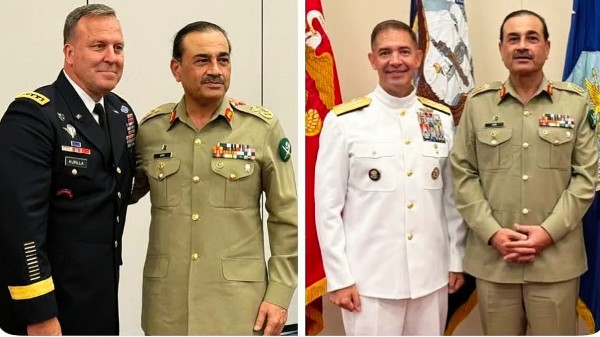
After a long hiatus marked by minimal diplomatic interactions, Pakistan and the US have witnessed a significant renewal in their engagement over the past few months. This discernible reset in US-Pakistan relations is characterized by enhanced defence cooperation, economic agreements, and high-level symbolism. Pakistan’s Army Chief has made two official visits to the US in as many months, reflecting a change in the approach of the US. Unprecedented invitations to a private White House lunch with President Donald Trump and the change of command at CENTCOM highlight the reestablishment of close military-to-military and diplomatic ties. The Trump administration has also recalibrated its approach to Pakistan, unveiling a “massive” oil exploration and development deal, and discussing broader cooperation in critical minerals, trade, technology, and counterterrorism. Although several factors have contributed to this shift, media coverage has particularly emphasized Pakistan’s endorsement of Trump for the Nobel Peace Prize as a personal glorification, along with the signing of a deal with World Liberty Financial, a cryptocurrency firm connected to the US President’s family. Underlying strategic reasons include possible future assistance in addressing Iran if required, changing regional dynamics marked by rising US-India trade tensions, new US tariffs on Indian goods, and Washington’s growing frustration with India over its increasing purchases of Russian oil and arms. Unlike in the past, Pakistan is positioning itself as a multidimensional partner of the US to enhance its leverage, not just as a security enabler.
The use of terrorism against India as an instrument of state policy by Pakistan began in 1989. Pakistan’s importance to Washington has fluctuated—peaking during periods such as the anti-Soviet jihad in Afghanistan in the late 1980s, US military engagement in Afghanistan post-9/11, and more recently when Pakistan has been viewed as a facilitator in the Afghan peace process. Historically, terrorist activities in J&K have tended to increase whenever Pakistan’s strategic utility to the United States has risen. Relying on US support as a shield, Islamabad has perceived greater latitude to support proxy war operations with reduced fear of international repercussions and strong punitive measures. During these periods, Pakistan has benefited from increased political leverage and aid flows, while militant groups operating in J&K have often found greater freedom of action. The highest numbers of terrorist killings in J&K occurred during the 1990s and early 2000s, which were the peak years of militancy. During this period, a large portion of the overall casualties—estimated at around 41,000 deaths, including civilians, security personnel, and terrorists—took place. In the 2010s, escalations in terror attacks like the 2016 Uri attack and the 2019 Pulwama attack coincided with critical moments in US-Pakistan cooperation in Afghanistan. Therefore, empirically, the Kargil conflict of 1999 and other surges in violence occurred during or just after periods of intense US-Pakistan cooperation. However, despite periods of global anti-terror pressure, infrastructure and support for militants have persisted in Pakistan, with the involvement of the Inter-Services Intelligence (ISI) in training, arming, and financing these groups.

Operation Sindoor, initiated on May 7, 2025, in the aftermath of the Pahalgam terror attack that claimed the lives of 26 innocent civilians, achieved its strategic and military objectives decisively. These objectives were to punish the perpetrators and planners of terror, destroy their infrastructure, demonstrate resolve, raise costs, impose caution on Pakistan, and thus restore deterrence that had waned since the Balakot air strikes five years ago. India has also adopted a declaratory policy on May 10, stating that any future act of terror will be considered an act of war against the country and will be responded to accordingly. This being an inflection point, the India-Pakistan equation has changed permanently by introducing the certainty of retaliation to every attack. However, it is important to distinguish between high-profile terrorist attacks like Mumbai, Uri, Pulwama, and Pahalgam, and localized, low-intensity terrorist incidents in J&K, which has been suffering from militancy abetted by Pakistan since the late 1980s. These low-intensity attacks, which have been occurring in J&K regularly, cannot be construed as a loss of deterrence.
Now, with Pakistan’s utility to the US having surged, it will be emboldened to continue the proxy war against India and keep tensions simmering. Therefore, terrorist actions below the tolerance threshold—restricted to J&K, targeted killings of migrants, tactical actions on the Line of Control (LC), and trans-LC firing—are likely to continue. The current estimated number of active terrorists in J&K, according to police and intelligence reports, is around 120, with 61 being foreign terrorists. Therefore, to make up numbers, a spike in infiltration of terrorists across the borders in J&K is very likely in the next few months before winter snows make passage across the LC in Kashmir difficult. Murmurs of statehood being restored in J&K are also likely to build pressure on Pakistan to direct terrorist handlers to initiate incidents to demonstrate that it is a disputed territory. These efforts will be complemented by increased narcotics smuggling—especially using drones—incitement of communal violence, and the smuggling of fake Indian currency notes, among other activities aimed at destabilizing India.
This can be related to recent media reports and intelligence inputs alluding to Pakistan having reactivated and rebuilt over 15 terrorist training camps and launch pads within the last 90 days in Pakistan-occupied Kashmir (POK), following India’s Operation Sindoor. Pakistan’s ISI and other government agencies are reportedly providing substantial funding—estimated at more than PKR100 crore—and logistical support to rebuild these camps. The reconstructed camps are smaller in size to avoid detection and are equipped with advanced technological counter-surveillance measures such as radar camouflage, satellite masking, and drone usage. These camps are located across various places in POK, including Kel, Shardi, Dudhniyal, Athmuqam, Jura, Leepa Valley, Tandpani, Nayyali, Jankot, Chakothi, and others. Additionally, four launch pads along the International Border in the Jammu region have also been reactivated. The terrorists are apparently using lessons from Operation Sindoor by employing smaller camps of about two dozen militants and dispersing locations to evade Indian intelligence and military forces. The rebuilt infrastructure efficiently supports recruitment, training, and operational planning for attacks in J&K.
Until US interests shift and Pakistan feels greater pressure to curb such activities again, the security forces need to retain and sustain a robust counter-infiltration posture on the LC, as well as an extensive counter-terrorism grid in the depth areas of J&K, irrespective of overall violence levels. At present, there is no room for complacency or lowering the guard, given the improved security situation in J&K. The gains made by the security forces should not be squandered at this stage.
The author is a former Vice Chief of Army Staff