
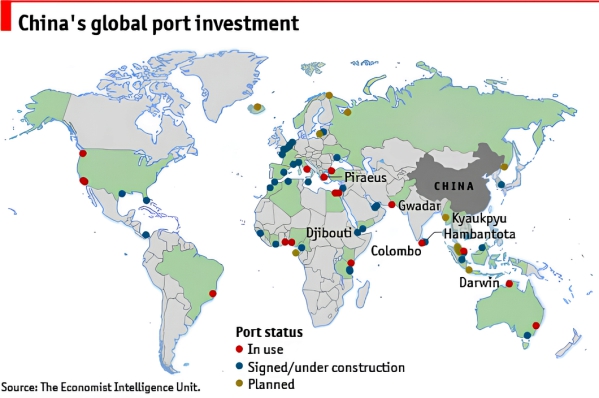

China has strategically expanded its control and influence over major ports worldwide through investments, ownership stakes, and operational management. These ports serve both economic and geopolitical objectives under China’s Belt and Road Initiative (BRI) and Maritime Silk Road (MSR). Below is a detailed overview of the major strategic ports under Chinese control:
Ports Controlled by China

Hambantota Port (Sri Lanka). China Merchants Port Holdings owns a 70% stake in this port. Located near major shipping lanes in the Indian Ocean, Hambantota is critical for China’s access to Middle Eastern oil and trade routes. The port has been leased to China for 99 years, raising concerns about its potential military use.
Gwadar Port (Pakistan). Operated by the China Overseas Port Holding Company. Situated near the Strait of Hormuz, Gwadar is a key part of the China-Pakistan Economic Corridor (CPEC). It provides China with direct access to the Arabian Sea, bypassing traditional routes through the Malacca Strait.
Port of Piraeus (Greece). COSCO Shipping holds a majority stake in this port. Piraeus serves as China’s gateway to Europe, facilitating trade and logistics across the continent. It is one of the largest container ports in Europe and plays a vital role in China’s MSR strategy.
Djibouti Port (Djibouti). Operated by Chinese companies alongside China’s only overseas naval base. Located at the entrance to the Red Sea, Djibouti is critical for controlling access to the Suez Canal and monitoring maritime traffic in East Africa. Its dual-use capability supports both commercial and military operations.
Chancay Port (Peru). COSCO Shipping owns a 60% stake. Recently developed as part of China’s expansion into Latin America, Chancay connects Chinese markets with South American commodities like copper and lithium.
Khalifa Port (United Arab Emirates). Operated by COSCO Shipping Ports. Located near the Strait of Hormuz, Khalifa Port strengthens China’s presence in the Middle East and facilitates trade with Europe and Africa.
Panama Ports (Panama Canal). Hutchison Ports operates ports on both sides of the canal. Though China does not control the canal itself, its presence in Panama enhances its ability to influence global shipping routes connecting the Atlantic and Pacific Oceans.
Darwin Port (Australia). A Chinese company holds a 99-year lease on this port. Strategically located near Southeast Asia, Darwin Port is critical for China’s trade routes in the Indo-Pacific region.
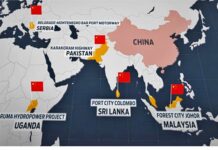
Colombo Port City (Sri Lanka). Developed by Chinese firms under a long-term lease agreement. This artificial city is designed as a hub for trade, finance, and logistics in South Asia, reinforcing China’s economic influence in the region.
Antwerp and Zeebrugge Ports (Belgium). COSCO Shipping has stakes in these European ports. These ports are vital for China’s trade with Northern Europe and serve as logistical hubs for its MSR network.
Port of Valencia (Spain). Managed by COSCO Shipping Ports. Valencia is a key European port connecting China with Mediterranean markets under the MSR framework.
Karachi Port (Pakistan). Operated jointly under agreements with Chinese firms. Karachi complements Gwadar as part of China’s strategy to secure maritime routes in South Asia.
Solomon Islands Ports. Recent investments have given China operational control over ports in this Pacific nation. These ports bolster China’s presence in Oceania, providing strategic access to Pacific shipping lanes.
Lamu Port (Kenya). Developed with significant Chinese investment. Lamu is part of China’s push into East Africa, connecting African resources with Asian markets via maritime routes.
Freeport Container Terminal (Bahamas). Managed by Hutchison Ports. This port enhances China’s reach into the Caribbean and provides logistical support for transatlantic trade.
Other Significant Ports
Beyond the most prominent ports like Hambantota, Gwadar, and Piraeus, there are several other significant ports that play critical roles in China’s global strategy. Below is a list of the next 10 important ports under Chinese control or influence, along with reasons for their strategic significance:
Felixstowe Port (United Kingdom). Operated by Hutchison Ports. As one of the largest container ports in the UK, Felixstowe is vital for trade between Europe and Asia. Its location strengthens China’s foothold in Northern European logistics and trade routes.
Rotterdam Port (Netherlands). COSCO Shipping has stakes in the port. Rotterdam is Europe’s largest port and a key gateway for goods entering and leaving the continent. China’s involvement here ensures access to European markets and enhances its Maritime Silk Road presence.
Lekki Port (Nigeria). Developed with Chinese investment. Located in West Africa, Lekki is designed to be a major hub for trade between Africa and Asia. It supports China’s access to African raw materials while serving as a potential base for future naval operations.
Walvis Bay Port (Namibia). Supported by Chinese development projects. Strategically located on the Atlantic coast, Walvis Bay provides China with access to Southern African trade routes and has been speculated as a potential site for future PLA Navy basing.
Balboa and Cristóbal Ports (Panama Canal). Operated by Hutchison Ports. These ports flank the Panama Canal, a critical chokepoint connecting the Atlantic and Pacific Oceans. Control over these ports allows China to influence global shipping routes and monitor U.S. naval movements.
Mombasa Port (Kenya). Developed with Chinese loans and operated under agreements favoring Chinese firms. Mombasa is East Africa’s largest port and a key node for China’s Belt and Road Initiative. It connects African markets to Asia and supports China’s growing influence in the Indian Ocean region.
Luanda Port (Angola). Developed with significant Chinese investment. Angola is a major oil supplier to China, making Luanda critical for securing energy supplies. The port also serves as a gateway to Southern Africa’s markets.
Victoria Port (Seychelles). Supported by Chinese infrastructure investments. Located in the Indian Ocean, this port enhances China’s maritime presence in a region critical for global shipping lanes and potential naval deployments.
Dar es Salaam Port (Tanzania). Upgraded with Chinese funding. Dar es Salaam is a major East African port that facilitates trade between Africa and Asia. Its location complements China’s broader strategy of controlling Indian Ocean trade routes.
Punta Arenas Port (Chile). Proposed deepwater port project under Chinese consideration. Situated near the Drake Passage, this port would provide China with access to Antarctic shipping routes and enhance its influence in South America.
Geopolitical Implications
Ports like Balboa, Cristóbal, and Punta Arenas allow China to monitor or influence critical maritime chokepoints such as the Panama Canal and Drake Passage.
Ports in Africa (e.g., Lekki, Luanda) facilitate the export of essential resources like oil, minerals, and agricultural products directly to China.
European ports like Felixstowe and Rotterdam strengthen China’s ability to dominate supply chains connecting Asia with Europe.
Several ports have dual-use potential, supporting both commercial operations and future military deployments (e.g., Walvis Bay, Victoria).
These ports are integral nodes in China’s Maritime Silk Road strategy, enhancing connectivity between continents.
China’s control over these strategic ports enables it to secure vital maritime chokepoints such as the Strait of Hormuz, Malacca Strait, Suez Canal, and Panama Canal. It can influence global supply chains by controlling key logistics hubs. Its control; enhance its military capabilities through dual-use infrastructure that can support naval operations during conflicts. Lastly, China’s economic influence is expanded by creating exclusive economic zones around these ports.
Conclusion
China’s growing network of overseas ports highlights its ambition to dominate global maritime trade while securing geopolitical leverage over critical shipping lanes. These investments are strategically distributed across continents-Asia, Africa, Europe, Latin America, and Oceania-making them central to Beijing’s broader Belt and Road Initiative goals. While these developments provide economic benefits to host countries, they also raise concerns about dependency on China and potential military use during geopolitical crises. China’s approach underscores Beijing’s long-term vision for maritime dominance while raising concerns about dependency among host nations and potential security risks for rival powers like the United States.