

Security Situation in South Asia China maintains its strategic objectives to be the preeminent power in East Asia, challenge the United States for global leadership, unify Taiwan with mainland China, advance the development and resiliency of China’s economy, and become technologically self-sufficient by mid-century.
China continues to advance its global capabilities to confront the United States and its allies across the diplomatic, information, military, and economic domains. China’s President Xi Jinping will continue to oversee a whole-of-government effort to better prepare China for competition with the United States and its allies in the Indo-Pacific region and beyond, and focused efforts to undermine popular and political support for U.S. military alliances and security partnerships.

This year, Beijing will watch Washington carefully for changes in policy and probably is preparing measures to deter, defeat, and retaliate against any U.S. moves it perceives as intending to disrupt China’s diplomatic, economic, and security objectives. China’s officials also will seek opportunities to drive wedges between the United States and its allies and partners. Along its periphery, China is likely to continue multidomain pressure campaigns against the Philippines, Taiwan, and other nations resisting China’s territorial claims. China will seek opportunities to exploit narratives that criticize Washington’s ability to manage crisis and conflict. These efforts are aimed at presenting China as a more responsible global leader.
Military Modernization and Spending
China is rapidly advancing its military modernization and developing capabilities across all warfare domains that could enable it to seize Taiwan by force, to better project power in the western Pacific, and to disrupt U.S. attempts to maintain presence or intervene in conflict in the Indo-Pacific region. China’s leaders are stressing the imperative of meeting key military transformation targets set for 2027 and 2035. These milestones seek to align the transformation of China’s People’s Liberation Army (PLA) with its other national modernization efforts, which include advancing “a new type of international relations”, being actively involved in “global governance”, and unification with Taiwan.
• In 2025, China announced a nominal 5.2 percent annual military budget increase to $247 billion. However, China’s actual defense spending is significantly higher, following 2024 defense spending of an estimated $304-$377 billion. These figures include publicly omitted defense spending such as research and development and defense industrial base subsidies.
• The PLA increased military pressure on Taiwan last year following the election of a new president. In April, the PLA conducted large-scale drills in the waters and airspace around Taiwan that included an aircraft carrier battle group to warn Taiwan. The PLA has demonstrated an improving ability to conduct near-simultaneous, geographically dispersed exercises. In particular, China’s Joint Sword series of exercises showed that the PLA is advancing its capabilities to blockade Taiwan. The PLA Navy (PLAN) executed its first dual aircraft carrier exercise in the South China Sea (SCS) last year, demonstrating a growing ability and capacity to project power across the region.
• China announced it had realigned the PLA’s Aerospace Force, Cyberspace Force, Information Support Force, and Joint Logistic Support Force directly under the Central Military Commission, which includes President Xi Jinping and other top military leaders. This realignment reinforces the importance PLA leaders place on space, cyberoperations, and EW as asymmetric weapons to paralyze adversaries’ information systems during a conflict.
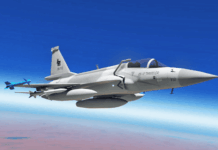
• PLA Air Force and PLA naval aviation forces continue to evolve into more technologically advanced, effective, and capable forces proficient at conducting joint operations. This past year, China unveiled the J-35A, a fifth-generation fighter that can operate from PLAN aircraft carriers.
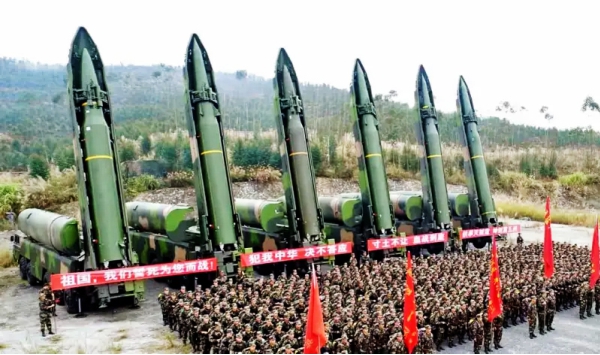
• The PLA Rocket Force has fielded approximately 900 short-range ballistic missiles (compared to 1,000 in 2023), 1,300 medium-range ballistic missiles (compared to 1,000 in 2023), 500 intermediate-range ballistic missiles (similar to 2023), 400 intercontinental ballistic missiles (compared to 350 in 2023), and 400 ground-launched cruise missiles (compared to 300 in 2023).
Despite these military advances, China continues to be either unwilling or unable to ensure safe operations in international air and maritime domains, which poses a threat to U.S. and international air and sea traffic operating in the area. Last year, a PLA J-10 fighter deployed flares in the path of an Australian Seahawk helicopter operating in support of UN-imposed sanctions against North Korea in the Yellow Sea.
President Xi continues to publicly express concern about disloyalty and corruption in the PLA’s ranks, and in 2024 a long-serving admiral in charge of enforcing loyalty and ideological compliance across the PLA was removed and investigated for corruption. The dismissal resembles the abrupt removal in 2023 of China’s defense minister and senior PLA Rocket Force officers, reportedly because of corruption surrounding weapons procurement and nuclear modernization. In mid-March, press outlets identified a vice-chairman of China’s Military Commission-Gen He Weidong-as another senior target of anti-corruption investigations.
Nuclear Capabilities
China’s nuclear warhead stockpile probably has surpassed 600 operational nuclear warheads. We estimate that China will have more than 1,000 operational nuclear warheads by 2030-much of which will be deployed at higher readiness levels for faster response times-and will continue growing its force until at least 2035. This supports the PLA’s objective to achieve a more diverse nuclear force, comprising systems including low-yield precision strike missiles and ICBMs with multi-megaton yields, to provide a broader range of nuclear response options.
• China’s approach to using nuclear force is based on PLA “deterrence” of an enemy first strike and “counterstrike” against an adversary’s military capability, population, and economy when deterrence fails. China’s current force modernization suggests that it seeks to have the ability to inflict far greater levels of overwhelming damage to an adversary in a nuclear exchange.
Space and Counterspace Capabilities
China’s space-related activities aim to erode U.S. space superiority and exploit a perceived U.S. reliance on space-based systems to deter and counter intervention in a regional military conflict. China is investing in space systems that enhance its own Command, Control, Communications, Computers, Cyber, Intelligence, Surveillance, Reconnaissance, and Targeting (C5ISRT) capabilities. China will continue to launch a variety of satellites that substantially enhance its intelligence, surveillance, and reconnaissance (ISR) capabilities; field advanced communications satellites able to transmit large amounts of data; improve its space-based positioning, navigation, and timing capabilities; and deploy new weather and oceanographic satellites.
• China possesses more than 1,000 satellites, including about 500 remote-sensing/ISR satellites, second only to the United States. By 2030, Chinese companies plan to launch thousands of satellites as megaconstellations, which are intended to compete with Starlink as alternative providers of global internet and secure communications.
China continues to dedicate significant resources to ensure its ability to disrupt, damage, and destroy adversary space capabilities. The PLA has operational anti-satellite missiles intended to target satellites in low Earth orbit and probably is developing more advanced capabilities to destroy satellites in geosynchronous orbit. China also has developed a variety of electronic warfare systems, including mobile jammers, almost certainly dedicated to denying an adversary’s satellite communications and Global Positioning System (GPS) capabilities during conflict. China has fielded multiple satellites, such as the Shijian-21 in geosynchronous Earth orbit, capable of disrupting or destroying other on-orbit satellites.
Cyberspace Capabilities
China-led cyberintrusions, including by the PLA Cyberspace Force and the Ministry of State Security, are targeting information networks around the world, including U.S. Government systems, to steal intellectual property and data and develop access into sensitive networks. China very likely will continue to use its cyberspace capabilities to support intelligence collection against U.S. academic, economic, military, and political targets and to exfiltrate sensitive information from defense infrastructure and research institutes to gain economic and military advantage.
• Since early 2024, the U.S. Government has publicly identified efforts by China’s cyberactors to pre-position for cyberattacks on U.S. critical infrastructure. China probably would use its access to attack these systems if it viewed a major conflict with the United States as imminent.
Taiwan and South China Sea
China is likely to continue its campaign of diplomatic, information, military, and economic pressure on Taiwan to advance its long-term objective of unification with Taiwan, deter any move by Taiwan toward independence, and test the United States’ commitment to Taiwan’s defense.
China possesses a variety of military options to coerce Taiwan, including increasing the frequency and scope of China’s military presence operations, air and maritime blockades, seizure of Taiwan’s smaller outlying islands, joint firepower strikes, and a full-scale amphibious invasion of Taiwan. China appears willing to defer seizing Taiwan by force as long as it calculates unification ultimately can be negotiated, the costs of forcing unification continue to outweigh the benefits, and its stated redlines have not been crossed by Taiwan or its partners and allies.
China has contested the Philippines’ presence in the South China Sea, particularly at Second Thomas Shoal, despite a 2016 international tribunal ruling in favor of the Philippines. The PLAN, China Coast Guard, and maritime militia sought to assert China’s perceived sovereignty by using water cannons and non-destructive lasers against Philippine ships and aircraft and conducting dangerous and aggressive maneuvering, resulting in collisions with Philippine counterparts.
These aggressive responses by the PLA are likely to continue during the next year, creating conditions that risk escalating conflict in the region.
Global Military Operations
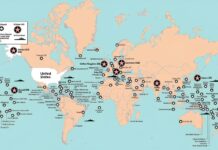
China is improving PLA systems to operate further from China for longer periods and establishing a more robust overseas logistics and basing infrastructure to sustain deployments at greater distances, efforts that can potentially threaten U.S. global operations or international commerce during a conflict. China is pursuing a mixture of military logistics models-including bases with garrisoned forces, host-nation shared facilities, exclusive PLA logistics facilities collocated with commercial infrastructure, or ad-hoc access to commercial infrastructure abroad-to support China’s overseas military logistics needs.
• In 2024, the PLA conducted a highly scripted exercise in Tanzania, representing China’s largest-ever military exercise in Africa. This exercise demonstrated the PLA’s ability to project power globally with the deployment of more than 1,000 troops by sea and air.
• This year, on 5 April 25, the Cambodian Prime Minister and a PLA delegation inaugurated the Joint Logistics and Training Center at Ream Naval Base in Cambodia. China’s Ministry of National Defense insists that the center is to support joint operations in areas like counterterrorism, disaster prevention, humanitarian assistance, and training. Preceding the official opening at Ream, the PLA continuously stationed two naval combatants-rotated a total of three times-at the facility’s pier. China probably also has considered establishing PLA military facilities in Burma, Thailand, Indonesia, Pakistan, Sri Lanka, United Arab Emirates, Cuba, Kenya, Equatorial Guinea, Seychelles, Tanzania, Angola, Nigeria, Namibia, Mozambique, Gabon, Bangladesh, Papua New Guinea, Solomon Islands, and Tajikistan.