

An IMR Analysis
The United States military is among the most formidable and extensively deployed armed forces globally. With a global presence spanning across numerous continents, it is involved in numerous operations, from peacekeeping missions to strategic deterrence, humanitarian relief efforts, and active combat. Understanding the global presence of the U.S. military demands a thorough dive into its deployment numbers, the strategic interests motivating its global footprint, and the obstacles and critiques it encounters. This article discusses ten major concerns connected to the global deployment of U.S. military, offering a full analysis of the topic.

1. Global Deployment Statistics and Locations
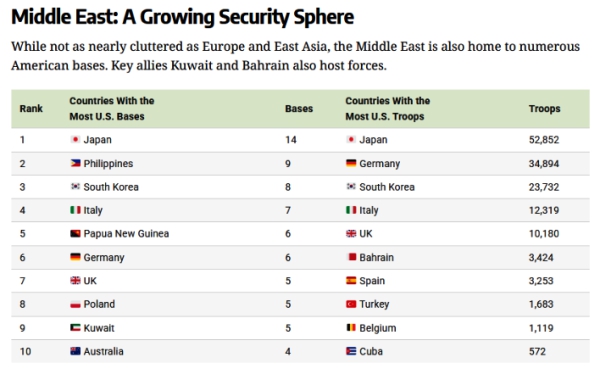
As of 2023, the U.S. military maintains a strong presence in over 70 nations globally, with roughly 200,000 troops stationed abroad. This extensive network of installations and personnel is essential to the U.S. defense strategy, facilitating power projection and maintaining worldwide influence. The military’s presence is particularly prominent in crucial regions including Japan, Germany, South Korea, and the Middle East.
— Japan: The United States military has maintained a presence in Japan since the conclusion of World War II, with approximately 50,000 personnel stationed there, particularly at the Kadena Air Base in Okinawa. Japan serves as a major center for U.S. military operations in the Asia-Pacific area.
— Germany: Germany hosts roughly 35,000 U.S. military personnel, principally stationed at bases like Ramstein Air Base, which acts as a logistical hub for U.S. operations in Europe, the Middle East, and Africa.
— South Korea: The U.S. maintains a presence of approximately 28,500 troops in South Korea, which serves as a fundamental element of its military strategy in Asia, intended to deter North Korean aggression and ensure security assurances to the South Korean government.
The United States sustains a substantial presence in the Middle East, especially in Iraq, Kuwait, Bahrain, and Saudi Arabia, with thousands of troops engaged in counterterrorism operations, regional security, and support for allies such as Israel.
This deployment serves various purposes, including deterring potential adversaries, providing security to U.S. allies, and ensuring the free flow of trade and resources.
2. Historical Context
The development of the U.S. military’s international presence originated with the conclusion of World War II, when the U.S. ascended as a predominant superpower. Following the war, the U.S. aimed to sustain military dominance and exert influence worldwide, chiefly by establishing overseas military installations.
— Post-World War II: Following World War II, the U.S. military assisted in the reconstruction of Europe and Japan. The creation of permanent bases in Europe and the Pacific helped the U.S. to maintain a strategic presence, ensuring that the balance of power stayed in its favor during the early years of the Cold War.
— Cold War Era: The U.S. military’s international presence markedly increased during the Cold War, motivated by the necessity to curb the proliferation of communism. This era witnessed U.S. military installations in areas such as Western Europe, the Middle East, and the Asia-Pacific, alongside augmented defense budgets to bolster military readiness against the Soviet Union and its allies.
— Post-9/11: The attacks on September 11, 2001, marked a new chapter in U.S. military operations. The U.S. military’s involvement in the Middle East and Central Asia expanded significantly, especially during the invasions of Afghanistan and Iraq. The United States established military installations in Iraq, Afghanistan, and adjacent nations to counter terrorism and foster regional stability.
3. Strategic Interests
U.S. military deployments are influenced by a confluence of strategic interests, encompassing alliances, security imperatives, economic considerations, and access to essential resources.
— Alliances: The U.S. military presence globally underpins a network of alliances, notably NATO, which is essential to the U.S. security strategy. These alliances allow the U.S. to sustain a worldwide presence and offer security assurances to nations that may otherwise be susceptible to regional threats.
— Security: The primary reason for U.S. military deployments is national security. The deployment of soldiers in critical places enables the U.S. to swiftly address emergent threats, including conventional combat, terrorism, and weapons proliferation.
— Economic Interests: The U.S. military guarantees access to international markets and resources. The U.S. sustains a presence in the Middle East to secure the stability of oil markets and facilitate unobstructed transit through vital maritime chokepoints such as the Strait of Hormuz.
— Power Projection: The U.S. military presence facilitates worldwide power projection, discouraging enemies from undertaking aggressive acts against American interests and sustaining the U.S.’s status as a global leader.
4. Presence in the Middle East
The U.S. military has maintained a significant presence in the Middle East for numerous decades, with the region being pivotal to U.S. foreign policy. U.S. engagement in the Middle East is motivated by a confluence of geopolitical, economic, and security factors.
— Counterterrorism: Following the 9/11 attacks, the U.S. military’s engagement in the Middle East became predominantly centered on counterterrorism efforts. U.S. forces were dispatched to Afghanistan to dismantle al-Qaeda and subsequently engaged in Iraq to counter the emergence of ISIS.
— Support for Allies: The United States has historically been a strategic friend of Israel, offering military funding and support in return for a robust and stable partner in the area. The U.S. has sustained military alliances with nations such as Saudi Arabia, Qatar, and the UAE, thereby assuring regional stability and resource accessibility.
— Iran: A large component of U.S. military activity in the Middle East is intended at opposing Iran’s influence in the region. The U.S. has stationed troops in countries like Bahrain and Kuwait to counter Iranian military activity and maintain a check on Iran’s nuclear ambitions.
NATO and European Presence
The United States’ dedication to NATO and its military deployment in Europe are essential elements of its comprehensive military strategy. The U.S. has been a cornerstone of NATO, both in terms of military backing and leadership.
— Countering Russian Aggression: In recent years, the U.S. military has ramped up its presence in Europe in response to Russia’s aggressive actions, particularly its annexation of Crimea in 2014 and the invasion of Ukraine in 2022. U.S. forces are stationed in NATO nations such as Poland, the Baltic states, and Germany, offering a formidable deterrent to Russian expansionism.
— European Security: The U.S. presence in Europe protects the defense of NATO member nations and promotes regional security. Alongside mitigating Russian threats, U.S. forces also engage in peacekeeping operations in regions such as the Balkans and partake in collaborative training exercises with NATO allies.
6. Presence in the Asia-Pacific Region
The U.S. military maintains a substantial presence in the Asia-Pacific region to ensure stability in one of the world’s most dynamic and critical areas.
— Japan: The U.S. maintains a military presence in Japan to ensure regional stability, particularly in light of North Korea’s growing missile capabilities and China’s rising influence. The United States extends security assurances to Japan via the U.S.-Japan Security Treaty.
— South Korea: South Korea serves as a crucial ally in the region, hosting U.S. troops to counter North Korean hostility. The United States and South Korea engage in collaborative military drills to maintain preparedness for potential conflict on the Korean Peninsula.
— China’s Ascendancy: With the expansion of China’s influence, the U.S. military has boosted its presence in the Asia-Pacific region to counteract China’s assertive maneuvers in the South China Sea and its escalating military capabilities. This encompasses a forward-deployed naval presence and air bases within the region.
7. Military Spending and Budget
Maintaining a global military presence comes at a tremendous financial expense. The U.S. defense budget is the largest in the world, at about $750 billion annually. This budget allocates resources for personnel, equipment, operating expenditures, and the building and maintenance of military installations globally.
— Global Defense Expenditure: U.S. military spending makes for a considerable share of global defense expenditures, which raises problems about sustainability and priorities. Critics contend that the United States allocates excessive resources to military operations overseas, therefore overlooking home concerns.
— Costs of Stationing Troops: Deploying military forces overseas incurs significant costs. The annual expense of sustaining U.S. bases in Germany is projected to exceed $30 billion. The financial impact is significant, despite modest offsets from host governments.
— Strategic Allocation: Although the U.S. military’s expenditure guarantees preparedness and international supremacy, there are persistent discussions on the potential reallocation of these resources to confront emerging threats such as cybercrime, climate change, and pandemics.
8. Forward Presence Strategy
The notion of forward presence pertains to the U.S. military’s strategy of deploying forces overseas to dissuade possible rivals and provide assurance to allies. This presence allows the U.S. to respond rapidly to potential crises and provides a concrete reminder of American military strength.
— Deterrence and Assurance: Forward presence functions to dissuade adversaries and to reassure U.S. allies of America’s commitment to their security. This is especially crucial in areas such as Eastern Europe and the Asia-Pacific, where the U.S. military presence can deter hostile acts.
— Swift Reaction: Forward presence allows the U.S. to swiftly address conflicts or emergencies, frequently eliminating the necessity to send forces from the U.S. mainland. This skill is essential in situations where time is crucial, such as in a possible battle with China or Russia.
9. Obstacles and Critiques
Notwithstanding its strategic benefits, the global presence of the U.S. military has encountered criticism and obstacles.
— Overextension: One of the primary concerns is the overextension of U.S. forces. The military’s vast responsibilities abroad can strain resources, weaken readiness, and create vulnerabilities if new conflicts occur.
— Monetary Expenditures: The expenditure on global military bases and operations is substantial, and detractors contend that these resources could be more effectively allocated to domestic infrastructure, healthcare, and education.
— Impact on Local Populations: The presence of foreign military bases has proved controversial in several countries. Some perceive the U.S. as a protector of security, while others regard its military presence as an intrusive force that undermines local life and sovereignty.
10. Prospective Trajectories and Policy Transformations
The future of U.S. military engagement overseas will hinge on evolving geopolitical circumstances. With China and Russia emerging as principal adversaries, the U.S. may prioritize military presence in these regions.
— Pivot to Asia: The Obama administration’s “Pivot to Asia” plan prioritized reallocating military assets to the Asia-Pacific region to address China’s ascendance. This trend is expected to persist, with an increased emphasis on naval and aerial capabilities in the region.
— NATO and Russian Aggression: NATO’s role will continue to be a cornerstone of U.S. military policy, particularly in light of Russia’s activities in Ukraine. Increased military support for Eastern European nations and a strengthened deterrence posture will certainly remain a focus.
— Ascendant Hazards: Future policy changes will be influenced by rising threats like as cyber warfare, climate change, and the spread of weapons of mass destruction. The United States may modify its worldwide presence to tackle these issues, emphasizing new technology and multinational collaborations.
Final Assessment
The global presence of the U.S. military is a cornerstone of its defense policy, ensuring global influence, regional stability, and the ability to respond to emergencies in real time. This extensive deployment has considerable advantages, including deterrence and force projection, although it also presents substantial obstacles, such as overextension, financial strains, and local population complaints. As global dynamics continue to alter, the future of U.S. military policy will depend on how well it adapts to emerging challenges and maintains a balance between global force projection and domestic goals.