

Nine Crucial Concerns
A major change in American foreign policy was brought about by Donald Trump’s reelection as president, which had an effect on international alliances, economic stability, and security dynamics. Nine key challenges that characterize America’s new foreign policy environment under Trump’s leadership are examined in this essay.

Allies Believing less in American leadership
The United States has been putting its own interests ahead of those of its longstanding allies under Trump. Traditional allies like Canada, Europe, Japan, and South Korea have lost faith as a result of this change. These countries are beginning to wonder if they can depend on the United States for economic and military assistance. Trump’s transactional approach to alliances, in which he frequently demands monetary reimbursement for U.S. military deployment and security promises, is partially to blame for the decline in confidence.
This approach was frequently expressed by Trump himself, who said, “The United States has been taking advantage for far too long.” Our allies must make the payment. NATO must take greater accountability for its own defense. Trump’s “America First” philosophy is evident in this statement, as he directly ties financial contributions to U.S. military support. Tensions were raised by his repeated criticism of NATO allies-especially Germany and France-for failing to achieve defense budget goals, which furthered the perception that the United States was prioritizing financial gains over international alliances.
Concerns about this strategy have been voiced by world leaders.
Unpredictability and Short-Termism
In reaction to U.S. unpredictability, German Chancellor Angela Merkel said, “Europe must take its fate into its own hands,” suggesting a possible move toward more autonomous European security capabilities.
Unpredictability and short-termism are hallmarks of Trump’s foreign policy. Both allies and enemies are now uncertain as a result of his capricious acts, which include putting tariffs on China, Canada, and Mexico and challenging defense agreements. Other countries find it difficult to develop long-term plans because they are unable to forecast how the United States will respond to world events.
Regarding this topic, one of Trump’s most well-known statements was, “Trade wars are good, and easy to win.” His short-term, direct approach to international relations is best illustrated by this statement, which he made amid his trade battle with China. Markets are volatile as a result of his unconventional economic policies, which have caused panic throughout the world. Leaders of the European Union and other allies were left scrambling to comprehend U.S. goals and modify their strategy in response to these words.
French President Emmanuel Macron, on the other hand, stated that “the world cannot longer rely on the United States alone to maintain peace and security.” This opinion highlights the ambiguity brought about by Trump’s erratic choices as well as the general apprehension among European leaders regarding the future of American leadership in the world.
Global Panic and Trade Imbalances
Global markets are uneasy due to the new U.S. policy, which include reciprocal tariffs. Because they foresee recessionary pressures in the U.S. economy, foreign investors are cautious about U.S. obligations. A global trade war has resulted from Trump’s “America First” trade strategy, which has affected economies all around the world and called into question the fundamentals of free trade.
Trump’s forthright remarks about trade demonstrate his combative approach: “We are the piggy bank of the world, and we have been taken advantage of for years. Time for a fair deal now. In an attempt to combat what he saw as unfair trade practices, he imposed unilateral tariffs on China, Mexico, and the European Union. However, these actions also led to retaliatory actions that affected U.S. exports and increased economic instability worldwide.
Concerns about the trade war have been expressed by world leaders, including Chinese President Xi Jinping, who said, “The trade war must stop, and both sides must start respecting international rules and norms.” Global dissatisfaction with Trump’s protectionist policies, particularly their disruption of long-standing trade frameworks, is reflected in this statement.
Possible Conflict in Military Partnerships
Allies like Japan are worried about whether the United States would uphold its security commitments in light of Trump’s position on NATO and military treaties. Although the United States has always been a pillar of NATO, Trump’s remarks regarding burden sharing and possible exit have raised questions. As a result, military alliances are being reevaluated, and European countries are being urged to become more independent.
In 2018, Trump made a particularly telling statement about NATO: “NATO is obsolete, and we should have pulled out long ago.” European leaders became alarmed by this and started thinking about other security arrangements in case U.S. involvement decreased. The idea that the United States will not always be left to shoulder the majority of defense obligations was strengthened by his frequent calls for NATO countries to fulfill 2% defense budget targets.
NATO Secretary-General Jens Stoltenberg, on the other hand, stated that “NATO remains the cornerstone of transatlantic security, and its future is in the hands of its member states.” His remark demonstrated the alliance’s will to stand firm in the face of Trump’s demands that allies increase their financial contributions.
North Korea and China’s Strategic Concessions
Strategic compromises made by Trump in an effort to negotiate on his terms have the potential to erode U.S. allies and increase Taiwan’s vulnerability. He uses a combination of negotiation and force with China and North Korea, which could lead to agreements that jeopardize the interests of regional allies. This has raised concerns about what allies can do to protect their economic and security interests beyond flattery and compromises.
Trump’s unrestricted desire to meet with Kim Jong-un of North Korea caused controversy. Trump famously declared, “I get along well with Kim Jong-un. I think we can work something out.” However, detractors claimed that this strategy diminished South Korea’s security concerns and gave North Korea more confidence.
“The trade war between China and the United States is unnecessary, and we both need to find a balanced solution that benefits both nations,” said Chinese President Xi Jinping in a statement about U.S.-China ties. His remarks expressed concern over Trump’s unpredictable handling of such delicate issues while also reflecting the ongoing talks between the two nations.
America’s Allies Must Become Stronger
Allies are encouraged to create independent military infrastructure, establish new alliances, and reconsider their economic plans in light of the ambiguity surrounding U.S. promises. To combat global dangers without depending entirely on the United States, this entails investing in regional security frameworks and diversifying trading partners.
Ursula von der Leyen, the German defense minister, underlined that Europe needs to be more accountable for its own security. The United States is no longer our exclusive option.
Discussions regarding European defense autonomy, including possible partnerships with other nations like China and Russia, as well as the development of autonomous security frameworks, have increased as a result of this sentiment.
Concerned about the United States’ withdrawal from the Asia-Pacific area, Prime Minister Shinzo Abe of Japan said, “Japan must work to ensure its security, with or without U.S. support.” This illustrates Japan’s increasing recognition that, given the ambiguity surrounding U.S. promises, it could need to strengthen its own military capabilities.
Retaliatory Actions Regarding American Economic Policies
Allies may think about retaliating against US trade policy with economic leverage. Controlling “choke points” in trade lines, which carry a large amount of America’s imports, such as nuclear fuels, metal supplies, and medications, may be one way to do this. Negotiations with the United States may benefit from such actions.
Trump’s trade policies have drawn criticism from the European Union. “The EU will take action to defend its interests against unilateral U.S. tariffs, but we still hope for dialogue and constructive relations,” said EU President Ursula von der Leyen. Her remarks highlight the EU’s attempts to uphold its economic interests while criticizing the US for its trade policies.
Iran also adopted a more assertive posture under President Hassan Rouhani, declaring, “We will use our oil exports as leverage against the U.S. sanctions.” We will take action if the United States violates international agreements. This comment highlights the dangers of a worldwide economic stalemate as well as the increasing use of economic retaliation against the United States.
Europe Must Close the Gaps in Its Armed Forces
In reaction to changes in U.S. policy, Europe is expected to increase its joint debt in order to fund its defense expenditures and potentially make investments in its own nuclear deterrent. It will take years to close these gaps, though, and will involve large expenditures for strategic planning and military modernization. European countries are already debating ways to take on more defense-related responsibilities, which could lessen dependency on the United States.
“Europe must develop its own defense capability,” said French President Macron. We cannot wait for every security issue to be led by the United States. This was a clear request for Europe to improve its military prowess and reconsider its reliance on American defense.
The Need for a Different International System
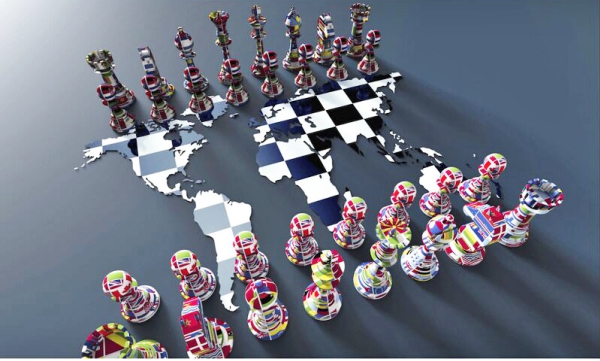
The need for Europe and Asia to establish a new security structure separate from the United States is increasing as a result of America’s withdrawal from long-standing alliances. This could entail new alliances and regional cooperation centered on mutual security assurances and common interests. A counterbalance to the dominance of superpowers like China and Russia, such an alternate order would aid in regional stabilization.
Xi Jinping, the president of China, has often called for a more multipolar global order. “We need to shift toward a more equitable and balanced global governance structure,” he stated. Without any one power controlling the others, nations must work together on an equitable basis. His comments demonstrate China’s increasing desire to establish a new global order where the United States has less sway.
Prospects for the Future
Global alliances and security institutions are expected to undergo additional changes in the upcoming years. The ability of countries to innovate and adjust to the changing geopolitical environment will determine how well they can handle these changes. Other areas must think about how to preserve stability and foster collaboration in a world where established alliances are being reassessed as the United States continues to uphold its “America First” strategy.